Logic Games
Find the decision that will constrain your next one
A logic puzzle can give you plenty of legal moves and still make only a few of them useful. Look for whatever will become harder to change after you act. A container may end up with too little space. An entire board may move when you meant to adjust one piece. Pokia's Logic tag has several ways to practise spotting those consequences. The most interesting move can be the one that gives you more options instead of making the layout look finished immediately.
Keep somewhere to put a piece while you sort
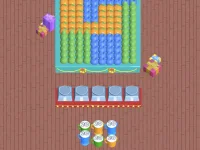
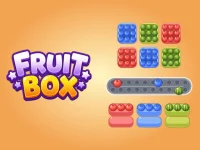
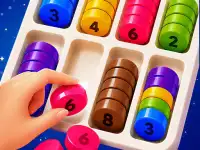
Juice Blender 3D works with fruit sorting. Before moving anything, look at the pieces that are already grouped and the ones you still need to separate. An open position can help you move between those two states. If you use every convenient space to finish the simplest groups, you might leave yourself nowhere useful to put an awkward piece when you reach it.
Choose one piece you eventually want to move and ask what would need to be clear before you can get to it. That gives you a reason to do an earlier move that looks less immediately satisfying. After you make it, check whether the tricky piece has actually become easier to reach. Small decisions become easier to evaluate when you connect them to something you want to be able to do later.
Check the entire board before tilting
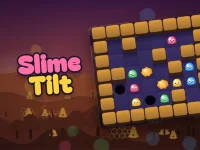
Slime Tilt makes every slime move together when you tilt the box. Bringing two of the same color together may be useful, but look at the colors off to the side before choosing a direction. Those pieces have to go somewhere too. Try predicting where one pair and one unrelated slime will stop. If the result surprises you, identify what stopped each movement. You can use that information on a later board even when the pieces start in different places.
Decide whether the matching route still exists
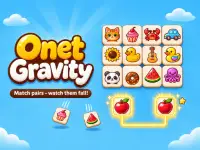
In Onet Gravity, a pair needs a route that follows the connecting rule, and clearing tiles shifts the arrangement. Finding two identical images is only the first part. Before making a match, picture which spaces it frees and which nearby tiles might end up in different positions. That can make the same set of pieces feel like a new puzzle after just one move.
Try a puzzle whose mistakes teach you something
Sorting, tilting, and connecting each ask you to keep a different constraint in view. You can spend a quick session on one board and come away with a practical idea for the next one. If you would rather explore puzzles based on space and movement, visit Puzzles for more layouts to work through. Give yourself a moment after a move to see which possibilities it opened and which ones it removed. That can be more useful than trying several pieces in a hurry.
When the answer seems obvious, check whether it still leaves you a way to handle the least convenient piece.